
🌬 Introduction
In Ayurveda, health is understood as a dynamic balance of the three doshas—Vata, Pitta, and Kapha. Among them, Vata Dosha is considered the most influential because it governs all movement in the body and mind.
From breathing and circulation to thoughts and emotions, Vata is the force that initiates and controls activity. Because of its subtle and mobile nature, Vata can become imbalanced easily, especially in today’s fast-paced lifestyle.
Understanding Vata Dosha can help you prevent disorders, improve vitality, and maintain overall well-being.
🌱 Qualities of Vata
Vata is composed of air and space elements and has the following qualities:
- Rough – Rough, undeveloped and short body. Continuously rough, weak, low, adhered and hoarse voice and vigils.
- Light – Light and unsteady movements, activities, diet and speech.
- Cold – Intolerance to cold.
Continuous infliction with cold, shivering and stiffness. - Abundance – Talkativeness and abundance of tendons and venous network.
- Mobile – Unstable joints, eye brows, jaw, lips, tongue, head, shoulder, hands and feet.
- Coarseness – Coarse hairs, beard-mustaches, small hairs, nails, teeth, face, hands and feet.
- Non-slimy – Dry and lacking lubrication
- Swiftness – Hasty initiation, quick irritation and disorder.
Quick in fear, attachment and disenchantment.
Quick in acquisition but with poor memory (retention).
Because of the presence of these qualities, these people have: Low degree of strength, life-span, progeny, means and wealth.
These qualities allow Vata to initiate movement in the body and mind.
⚡ Normal Functions of Vata
In the body:
Regulates breathing, circulation, and nerve impulses
Controls movement and elimination
Stimulates mind, speech, and senses
Maintains tissue formation and life processes
In nature:
Movement of air, clouds, and water
Seasonal changes and plant growth
Motion of celestial bodies
🌪 Imbalance and Disorders
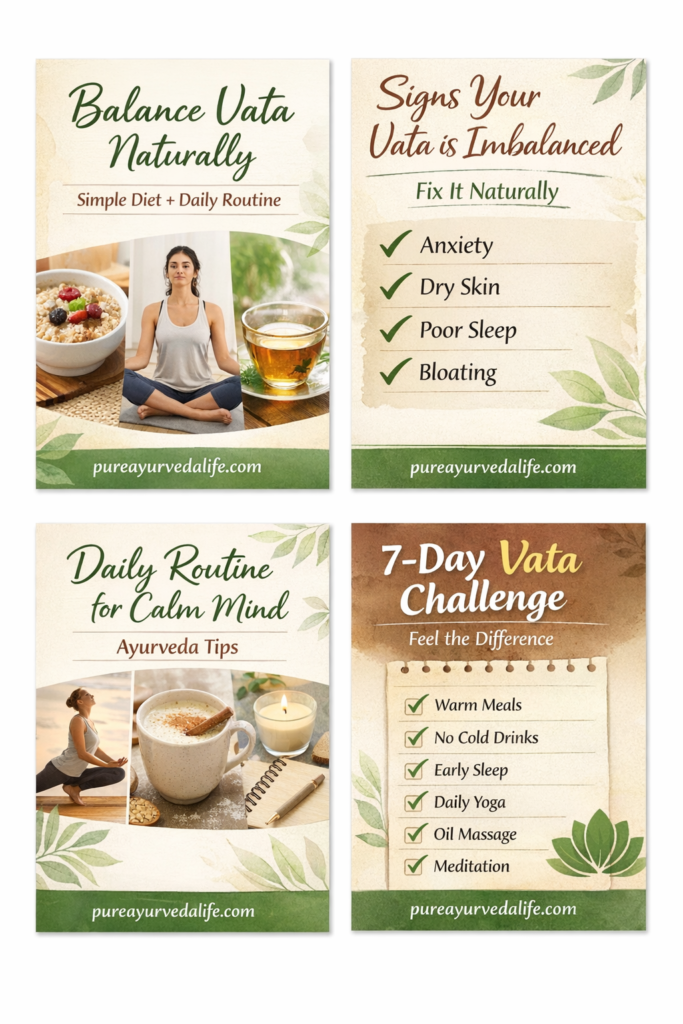
When Vata becomes imbalanced, it can cause:
- Anxiety, fear, and restlessness
- Dryness, stiffness, and pain
- Constipation and bloating
- Insomnia and fatigue
- Joint pain and sciatica
- Tremors and nervous disorders
- Weakness and body instability
🌿 Subtypes of Vata
- Vata is divided into five functional types:
- Prana Vata – Controls breathing and intake
- Udana Vata – Governs speech and expression
- Samana Vata – Supports digestion
- Vyana Vata – Regulates circulation
- Apana Vata – Responsible for elimination
🌿 Causes of Vata Imbalance
- Vata imbalance arises from:
- Irregular routine and poor sleep
- Cold, dry, and light foods
- Stress, anxiety, and overthinking
- Excess travel and activity
- Seasonal changes, especially autumn
🌸 How to Balance Vata
Vata is balanced by warm, nourishing, and grounding practices.
Diet:
- Warm, cooked, and moist foods
- Sweet, sour, and salty tastes
Lifestyle:
- Regular daily routine
- Proper sleep and rest
- Meditation and gentle exercise
Therapies:
- Oil massage (Abhyanga)
- Warm baths and steam
- Enema therapy (most effective for Vata)
🌼 Signs of Balanced Vata
When Vata is balanced, you may experience:
- High energy and enthusiasm
- Creativity and quick thinking
- Alertness and adaptability
- Proper body functions
💮 Seasonal Care for Vata
- Accumulates in summer
- Aggravates in rainy season
- Pacifies in autumn
Adjusting your routine with seasons helps maintain balance.
🌿 Conclusion
Vata Dosha plays a vital role in movement and communication within the body. When balanced, it brings creativity, energy, and clarity. When disturbed, it can lead to both physical discomfort and mental unrest.
By following a warm, stable, and nourishing lifestyle, you can maintain Vata balance and improve your overall health and well-being. Small daily habits can make a powerful difference in creating a life of balance, strength, and vitality.

Leave a Reply